Built on research. Not on belief, not on hype, and not on anything you have to take on faith.
“Work on the layer below the decision” sounds like a claim you should be suspicious of. So here’s the part that isn’t. Every move a DOZUS session makes maps to a real, studied area of behavioural science: rehearsal, receptive states, repetition, the brain’s threat maths, how a sense of self gets built. Each one in plain language, with the citation underneath.
12 questions · about 4 minutes · no card needed
DOZUS has no testimonials yet, no before-and-afters, no five-star wall. What it has is a mechanism, and a mechanism you can check.
Most products in this space ask you to believe. They show you a transformation, a testimonial, a number with no source, and hope the feeling carries you to checkout. We can’t do that honestly: we haven’t run a cohort yet. And belief is the whole currency of the accounts that left you where you are. So we’re doing the opposite. We’re showing you the wiring.
Each section below takes one thing a session does, states it plainly, and names the research area it draws from. None of them are fringe. Mental rehearsal is standard in rehabilitation medicine and elite sport. The receptive state is the one studied in memory and suggestibility work. Repetition building structure is the oldest finding in the field. The citations are right there to read.
One honest line before you start: a mechanism being real is not the same as a product being proven. The studies below describe the ground DOZUS is built on. They are not evidence that DOZUS itself has been tested. We say more at the bottom, plainly, because a brand that overclaims here would be doing the exact thing we’re telling you to be wary of.
See how a session uses all of this →Rehearse it vividly and the brain treats it as practice.
What DOZUS does A session has you rehearse a response (speaking up, starting the task, training without negotiating) in vivid internal detail. The claim that this changes anything isn’t ours to make up. It’s the founding result of motor-imagery research.
When you imagine an action with enough intensity, the brain recruits much of the same circuitry it uses to perform it. This isn’t a metaphor and it isn’t new. It has been measured, replicated, and used in rehabilitation medicine, surgical training, and elite sport for decades.
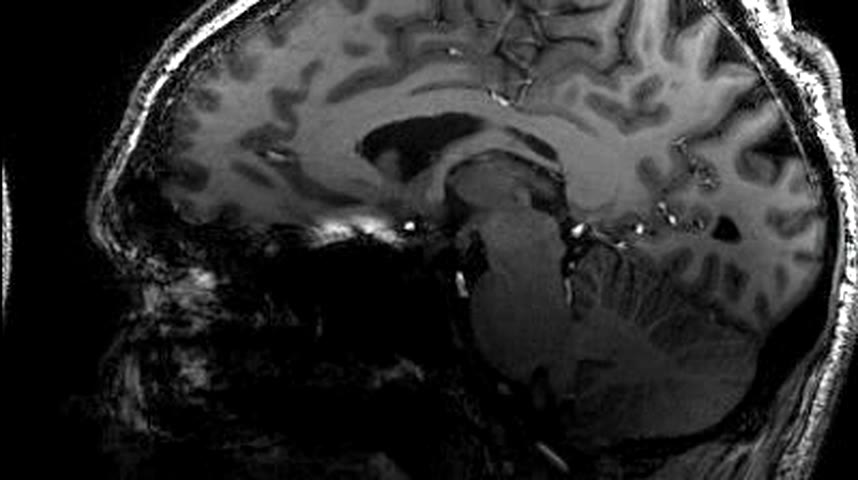
People who only imagined playing a five-finger piano sequence showed motor-cortex changes comparable to those who physically practised it, mapped with transcranial magnetic stimulation across five days of training.
Area: mental practice · motor cortexParticipants who performed only mental contractions of a finger muscle (no physical movement) increased measured strength over twelve weeks. The proposed mechanism: stronger cortical drive to the target muscle, from imagery alone.
Area: imagined effort · cortical driveThere’s a state where rehearsal lands deeper. We aim for it.
What DOZUS does The first phase of a session settles you out of the busy, analytical mind and into a quieter, more receptive state, the groundwork the rest of the conditioning runs on, not a warm-up that happens before the work begins. The reason that phase exists is the research linking the theta band to how readily something gets encoded, and to how open a person is to suggestion.
Theta (4–8 Hz) is the slow band your brain passes through every night on the way into sleep, the one most associated with reduced critical filtering and with how strongly a memory takes hold. You don’t need to chase a brainwave to listen to DOZUS, and we’re not claiming a recording can put you in a precise frequency. But the architecture of a session is built around reaching a receptive state first, because the clearing and the rehearsal that follow are where the conditioning happens, and that is the work the research says a receptive state does the most for.
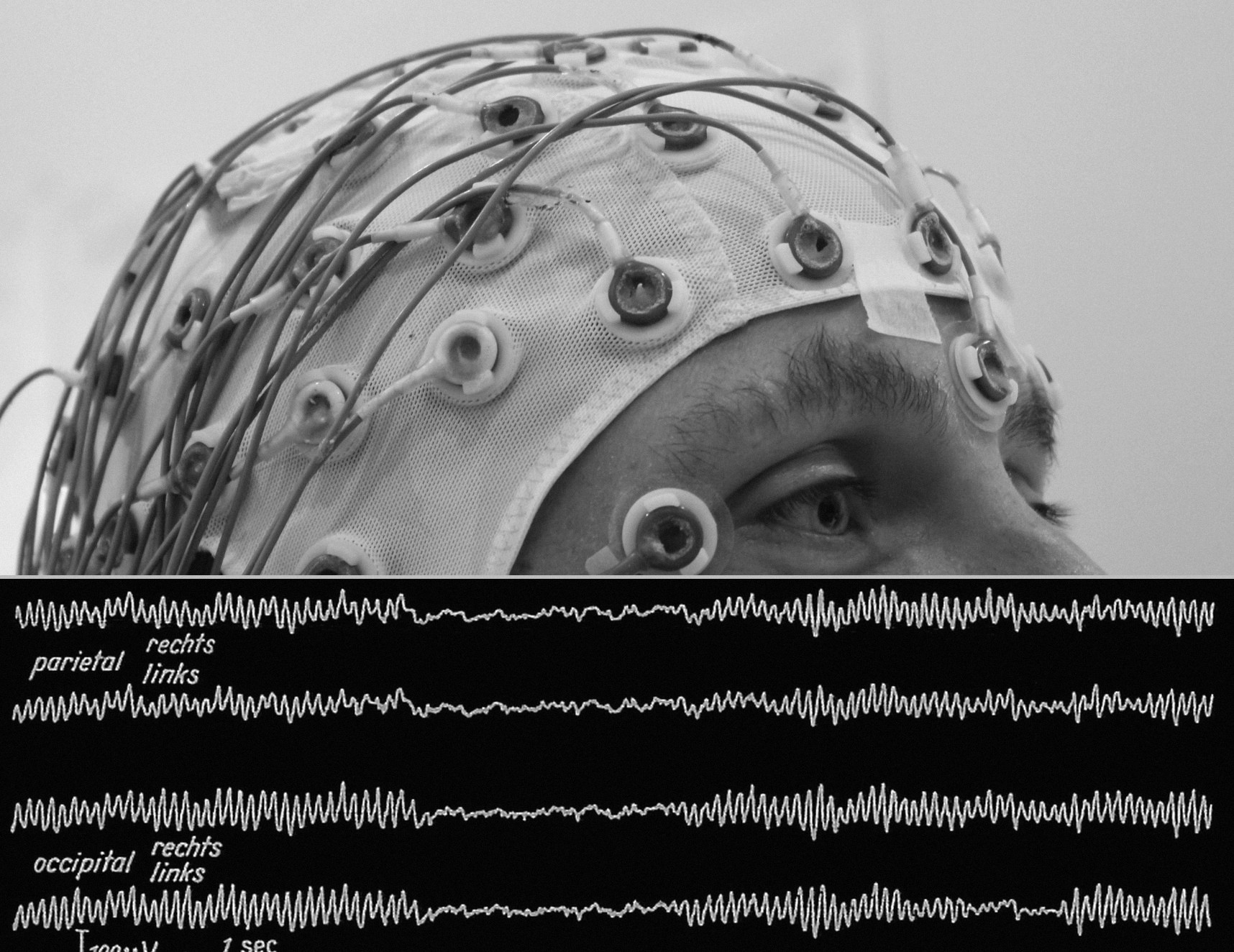
A heavily cited review analysing how EEG alpha and theta oscillations track cognitive and memory performance, with event-related increases in theta consistently tied to how well new information is encoded. The receptive state isn’t mystical; it has a measurable signature.
Area: theta · memory encodingIn fourteen-channel EEG, people higher in hypnotic suggestibility showed lower moment-to-moment variability in their theta, alpha and beta signals, alongside higher theta and alpha connectivity across parietal regions, a measurable marker of a more receptive state, not just a reported feeling.
Area: suggestibility · EEGOne session opens a pattern. Daily ones are what set it.
What DOZUS does Every protocol is daily, and we’re blunt that the streak matters more than any single session. That isn’t a retention trick dressed up as science. It’s the oldest, least controversial finding in the whole field.
Connections between neurons strengthen when they fire together repeatedly. A single intense rehearsal can open a new pattern; repetition is what consolidates it into the brain’s default wiring. The same principle explains how the pattern you’re trying to break got built in the first place, by accident, through enough repeats. DOZUS runs the same route deliberately.
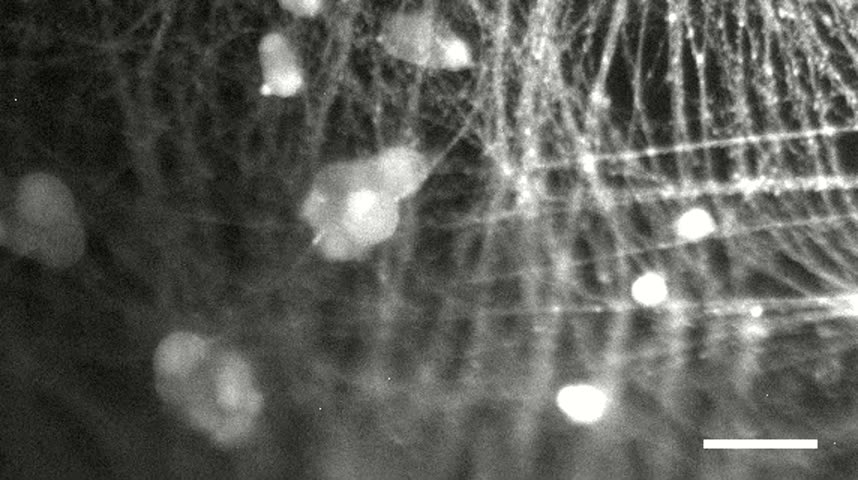
The founding principle of modern neuroscience: when one neuron repeatedly helps fire another, the connection between them strengthens. Now called Hebbian plasticity, it underpins the current understanding of learning, memory, and neural adaptation.
Area: synaptic plasticityA study of how automatic behaviours form found that consistency (daily repetition in a stable context) was what predicted a behaviour becoming automatic, not occasional high effort. Why DOZUS is built around the streak.
Area: habit automaticityThe flinch fires before you’ve decided anything.
What DOZUS does A protocol like Rejection Reset works on the predicted cost of being seen failing, the response that fires before the conscious “is this a good idea” loop even starts. So a session doesn’t argue with that reaction; it surfaces the old charge and rehearses a new response that doesn’t match it. The reason we target that layer, in that order, is what the research shows about how the brain forecasts threat and how an old emotional learning actually gets updated.
The reaction that freezes you at the edge of a moment is faster than thought, the nervous system runs a prediction and braces before you’ve weighed anything. Plenty of persistent avoidance lives at this layer, not in the part of you that reasons, which is why talking yourself out of it so rarely holds. The research points to a different route: bring the old learning to the surface and give it an experience that doesn’t fit it, and the learning itself can change. That is the approach documented across threat-conditioning, exposure, and memory-reconsolidation work.
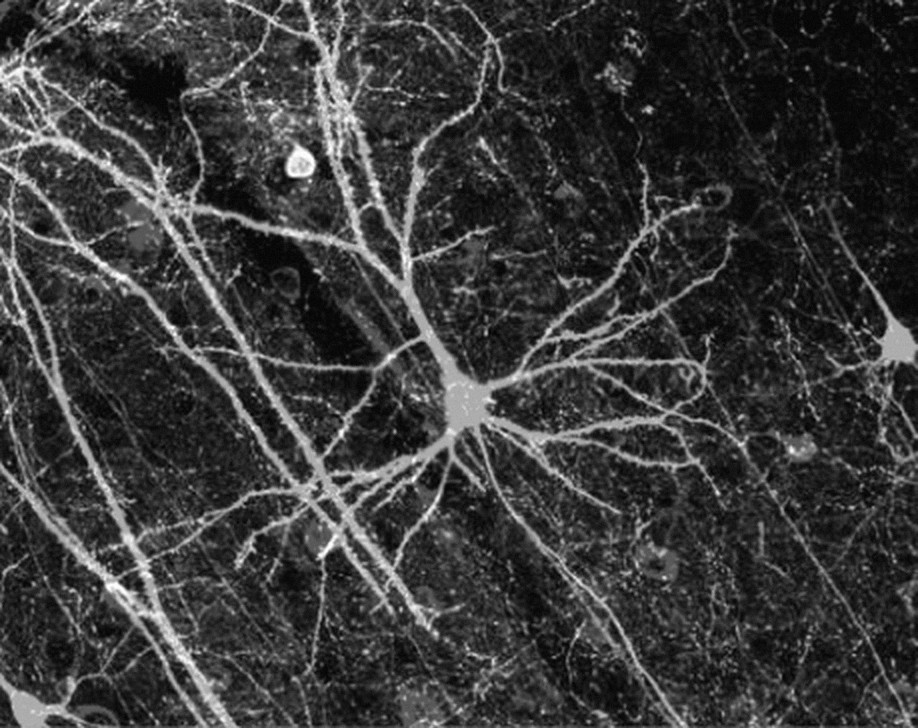
Decades of work mapping a fast subcortical route that triggers a defensive response ahead of conscious appraisal, evidence that the flinch can fire before the thinking brain is involved, which is why reasoning with it rarely works.
Area: threat circuitryA synthesis of the memory-reconsolidation research into a practice principle: an emotional learning becomes open to change when a new experience mismatches it just enough. The basis for why a session clears the old charge first, then rehearses a response that doesn’t fit the old one, rather than layering a new habit on top.
Area: memory reconsolidationA self that holds shape can be built. So can the one that dissolves.
What DOZUS does The People Pleasing and Inner Critic protocols work on the sense of self underneath the reflex, the part that folds when someone else takes up space, or narrates you harshly by default. That these are shaped, not fixed, is the premise of self-concept and social-evaluation research.
How clearly and stably you hold a sense of who you are is something researchers can measure, and it tracks with how you handle pressure, criticism, and other people’s expectations. The harsh inner narration and the reflex to dissolve into what others want aren’t fixed traits; they’re learned, self-referential patterns. Which means they can be conditioned toward something steadier, which is precisely what these two protocols target.
Introduced self-concept clarity, how clearly and consistently a person holds their sense of self, as a measurable construct, and linked higher clarity to steadier self-esteem and lower reactivity to others’ views.
Area: self-concept clarityA foundational model of social anxiety centred on a distorted self-image and an anticipated negative judgement from others, a learned, self-referential loop, which is the layer the People Pleasing and Inner Critic work is aimed at.
Area: social-evaluative anxietyDOZUS has not been clinically tested. The research on this page describes the mechanisms our protocols are built on. It is not evidence that DOZUS itself works, is clinically validated, or will produce any particular result for you, and we’ve worded every claim above to be accurate about that difference. Where we say a session “draws on” or “uses the same mechanism studied in” an area, that is exactly and only what we mean.
DOZUS is a self-development tool, not therapy, medical treatment, or a diagnosis. If you are dealing with a diagnosed mental-health condition, or anything that feels heavier than a pattern you want to shift, work with a qualified professional. If you are in crisis, please use these crisis resources. This is not the right tool for that, and we won’t pretend otherwise.
The mechanism checks out. The next move is finding which pattern to run it on first.
Twelve questions read where you’re actually stuck and order the six protocols around it, so you start on the one that unlocks the rest. No card needed to see your result.